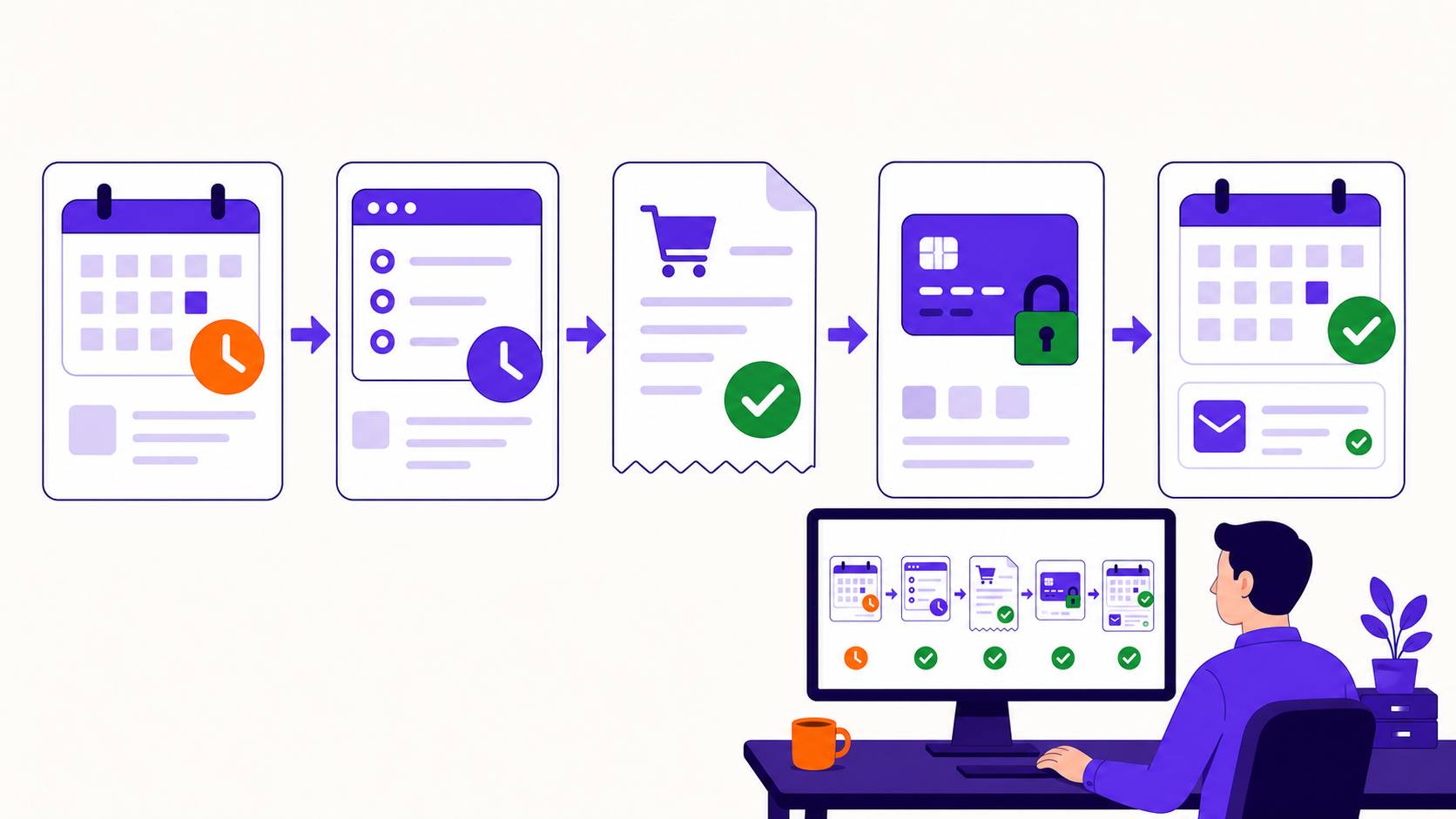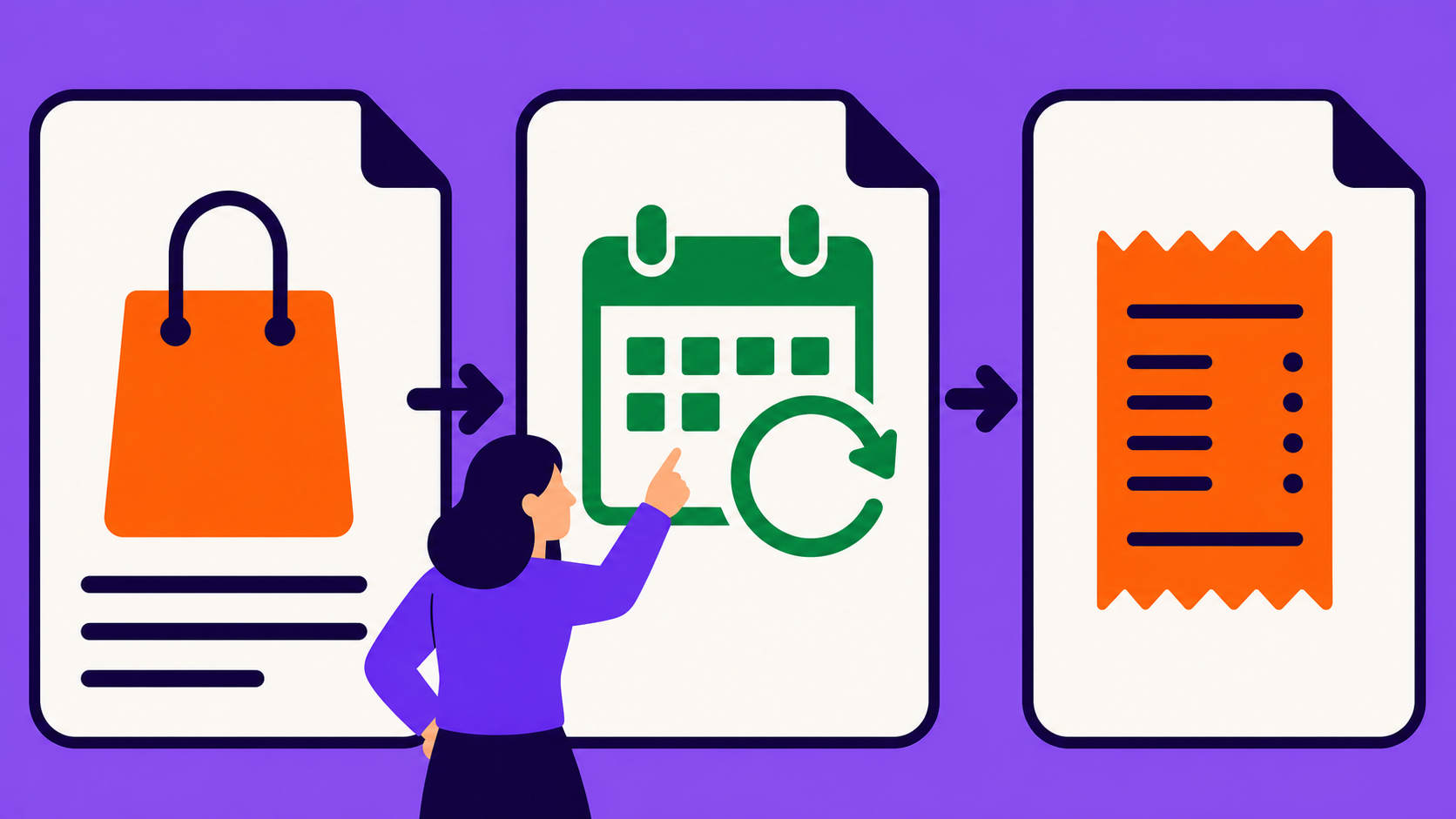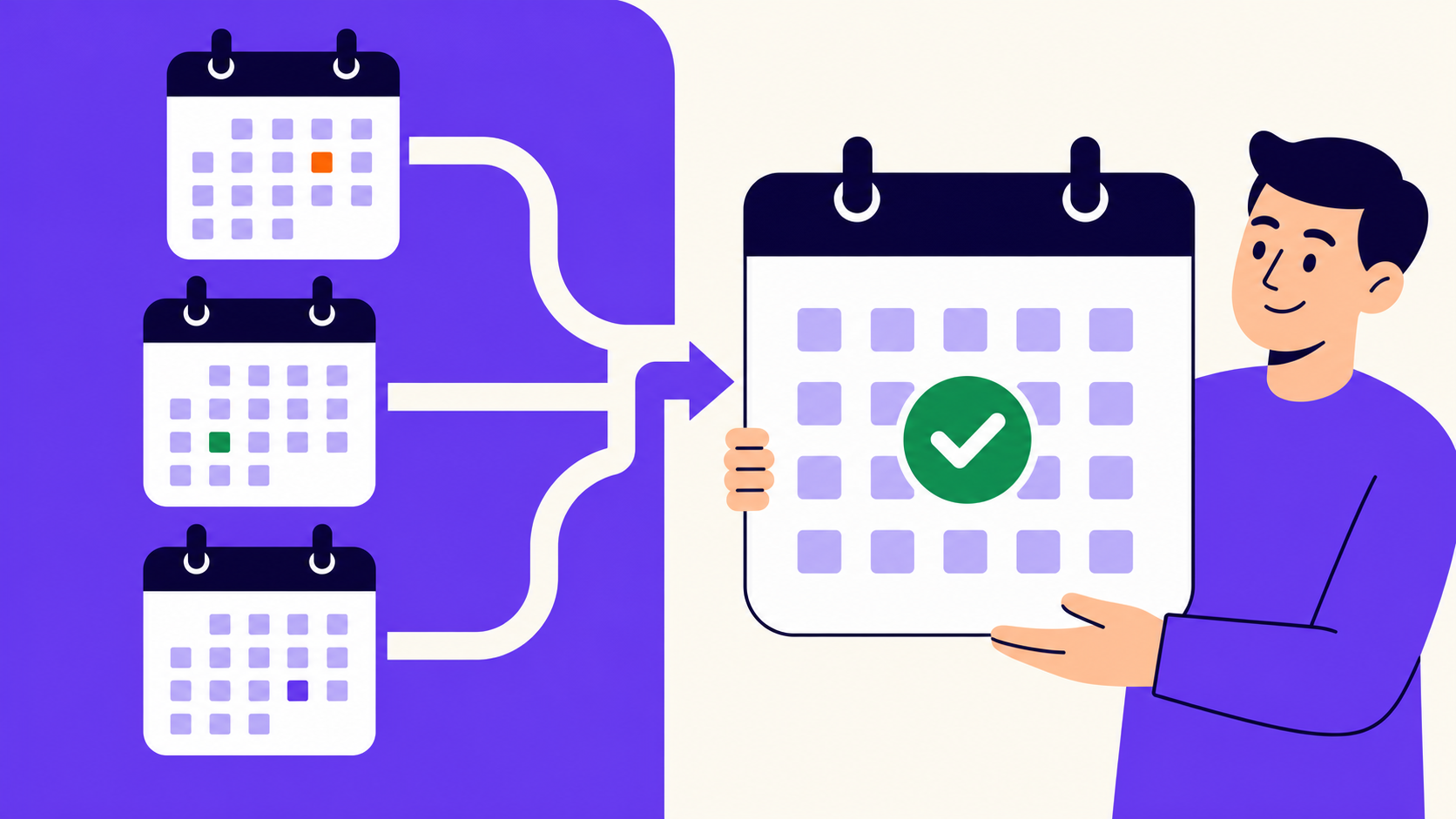
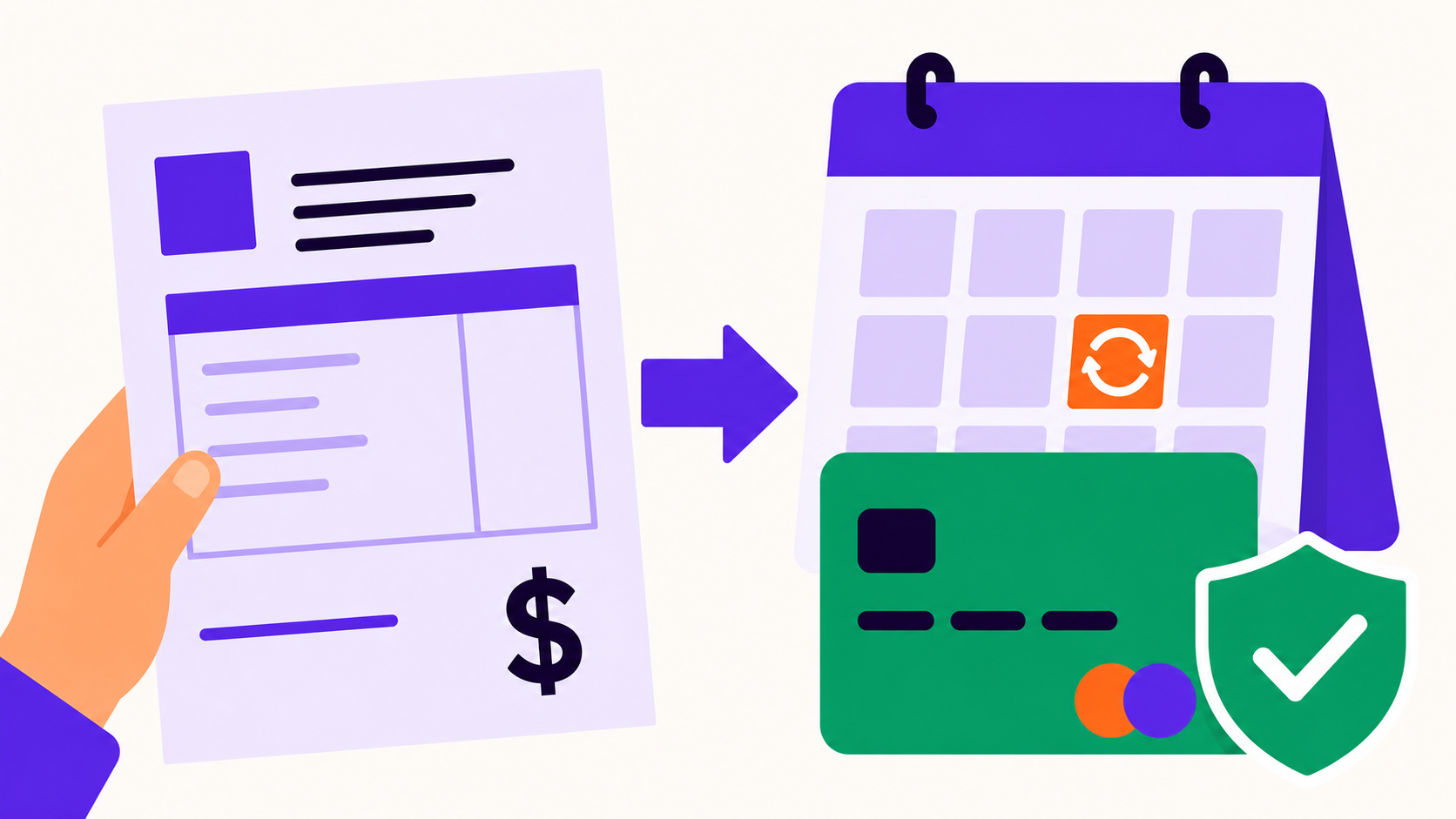
Use automatic renewals when the gateway and product support reliable off-session collection and customers expect uninterrupted service. Use manual renewals when each payment needs customer approval, the gateway cannot store a reusable method, or high-touch invoicing is intentional. Compare total operational effort, failure handling, authentication, reconciliation, and customer expectations—not checkout convenience alone.
Key takeaways
- Manual renewal creates a payable order; the customer or admin completes payment.
- Automatic renewal requires a supported reusable payment contract and clear schedule owner.
- Stripe, PayPal, and Paddle do not share the same scheduling or retry architecture.
- Manual fallback should be explicit, secure, and measurable.
- Test renewal, failure, method update, cancellation, and webhook recovery per gateway.
The decision in one table
| Dimension | Manual renewal | Automatic renewal |
|---|---|---|
| Payment action | Customer/admin pays open order | System or remote gateway attempts payment |
| Customer effort | Every cycle | Usually only on failure/authentication |
| Payment context | Current checkout selection | Stored token or remote agreement |
| Main risk | Unpaid invoices and operational follow-up | Declines, authentication, webhooks, duplicate attempts |
| Best fit | High-touch invoicing, unsupported methods, explicit approval | Ongoing access, replenishment, lower-friction continuity |
| Required proof | Pay Now path and reminders | Off-session charge, reconciliation, retry, update-method path |
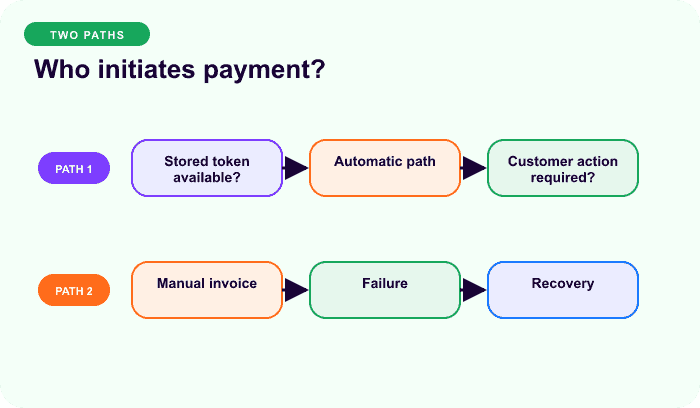
How manual renewals work
The subscription engine creates a renewal order with the current amount and due date. The customer receives a secure Pay Now route or the administrator records a supported payment. Until paid, the order remains open and the subscription follows the store’s grace, on-hold, access, and cancellation policy.
Manual is not necessarily a downgrade. It can be the correct contract when a client approves each invoice, pays by bank transfer, needs purchase-order review, or uses a method without automatic tokenized renewal. The page and emails must not call it automatic.
ArraySubs core supports manual renewal invoices. That makes core suitable for a complete manual lifecycle, but staff should still verify invoice creation, reminders, late payment, status restoration, and the next schedule.
How automatic renewals work
Automatic collection needs three agreements to align:
- the customer authorizes future charges under disclosed terms;
- the gateway provides a supported stored payment or remote subscription contract;
- the subscription engine knows who owns schedule, retry, webhook, and cancellation state.
WooCommerce documents payment-gateway compatibility as extension- and gateway-specific; support for ordinary checkout does not prove support for automatic subscription renewals (gateway compatibility).
Current ArraySubs Pro supports automatic-payment integrations for Stripe, PayPal, and Paddle, with different ownership:
- Stripe: ArraySubs owns the local schedule and creates renewal orders/PaymentIntents.
- PayPal: PayPal owns the remote subscription schedule; local state follows webhooks.
- Paddle: Paddle owns the remote billing schedule and recovery; local records reconcile events.
Stripe Billing Smart Retries do not automatically control the current ArraySubs Stripe path because it does not use a Stripe Billing subscription invoice.
Compare the operational workload
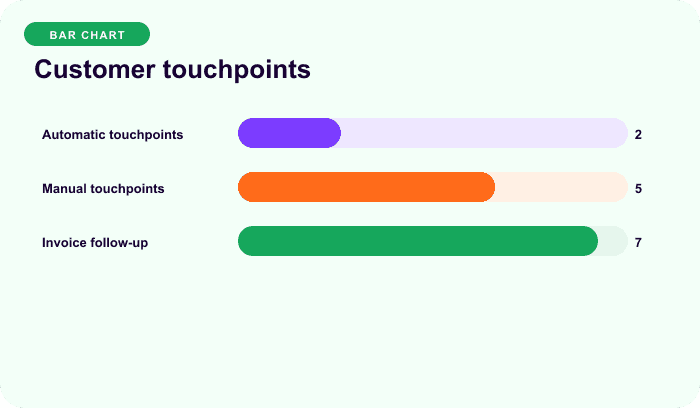
Conceptual workload, not measured performance.
Manual collection shifts work toward customer action, reminders, overdue follow-up, and order reconciliation. Automatic collection shifts work toward gateway integration, token/authentication state, decline classification, webhooks, retries, and duplicate-charge controls.
Use your own data:
manual cost per paid renewal
= staff handling + customer support + payment reconciliation + late-payment impact

automatic cost per paid renewal
= gateway fees + integration/monitoring + failure recovery + disputes/refunds
Do not assume automation always costs less. High failure rates, unsupported authentication, or remote/local mismatches can erase the benefit.
Authentication and payment-method changes
Automatic does not mean invisible. Some renewals require customer authentication or a new method. The failure message should link to the exact secure action and explain what happens next. Repeating unchanged expired or invalid credentials is not a recovery strategy.
For manual renewal, the customer can select an available method during payment. For automatic renewal, distinguish updating the account default from updating the subscription’s own reusable payment context; the integration must define which future charges are affected.
Failure and retry ownership
| Mode | Recovery owner | Safe action |
|---|---|---|
| Manual | Customer/admin | Keep one open order and clear Pay Now instructions |
| Stripe via ArraySubs | Local ArraySubs flow | Classify failure, verify not already charged, run bounded supported retry |
| PayPal | Remote PayPal policy | Reconcile remote state; use hosted recovery; avoid duplicate local engine |
| Paddle | Remote Paddle policy | Follow past-due/recovery events and align local grace |
Current ArraySubs Stripe behavior can schedule up to three retries, 24 hours apart. That is current product behavior, not a universal ideal. PayPal and Paddle policies can change remotely.
When to choose each model
Choose manual when:
- each charge needs active customer approval;
- bank transfer, invoice, or procurement is normal;
- the method lacks supported automatic renewal;
- service starts only after confirmed payment;
- staff can support the expected volume.
Choose automatic when:
- uninterrupted access or replenishment is the customer promise;
- the gateway supports the exact product/cart/currency;
- authorization and cancellation copy are clear;
- failures have a usable customer action path;
- webhook, scheduler, and duplicate-charge monitoring exist.
Offer both only when the product page and account clearly distinguish them and each path is tested.
Verification checklist
- Complete signup with each offered mode.
- Confirm the subscription stores the expected gateway and automatic/manual flag.
- Generate the renewal order and inspect amount, tax, shipping, and payment route.
- Pay a manual order as the customer.
- Run an automatic sandbox renewal.
- Test authentication, decline, update-method, and late-payment recovery.
- Drop or delay a webhook in a controlled test and confirm reconciliation before another charge.
- Cancel and verify both local and remote schedules stop correctly.
For the surrounding lifecycle, read How WooCommerce subscription renewals work.
Final recommendation
Choose the payment mode that matches the customer contract and gateway capability. Manual renewal is a deliberate invoicing model; automatic renewal is a distributed system that needs monitoring and recovery. Compare ArraySubs core and Pro for the mode you have validated.
Frequently asked questions
Are manual subscription renewals fully supported in ArraySubs Free?
Yes. Current ArraySubs core creates manual renewal orders and customer payment flows. Test invoice delivery, Pay Now, late payment, status restoration, and the next scheduled date in your store.
Which ArraySubs gateways support automatic renewal?
Current ArraySubs Pro integrations cover Stripe, PayPal, and Paddle. Their architectures differ: Stripe is locally scheduled, while PayPal and Paddle own remote billing schedules. Verify current product and gateway compatibility before launch.
Can a manual subscriber switch to automatic payment later?
Only through a supported gateway and payment-method update workflow that attaches valid reusable context to the subscription. Do not infer that changing an order’s payment method alone updates future renewals.
Does automatic renewal guarantee payment?
No. Cards expire, authentication can be required, funds can be insufficient, webhooks can fail, and remote schedules can diverge. Automatic systems still need customer action paths, retries, reconciliation, grace, and stop rules.
Should a store offer both manual and automatic options?
Offer both when customers have a real need and operations can support both. Explain the difference before checkout and test every combination of product, currency, gateway, renewal, failure, and cancellation.
Disclosure, verification, and update log
- July 2026: Verified against current ArraySubs core/Pro gateway ownership and official WooCommerce gateway-compatibility guidance. Remote gateway policies can change.
Continue from strategy to setup
Use a recipe when the model is settled
These articles own the decision and operating model. The ArraySubs feature map and recipes cover the exact product, billing, and customer-workflow configuration.
Written by
Emran // ArrayHash
Research and practical guidance for WooCommerce subscription operators and implementation teams.
Technical review
ArraySubs Engineering Team
Reviewed against current ArraySubs code, product documentation, and the linked primary platform sources.