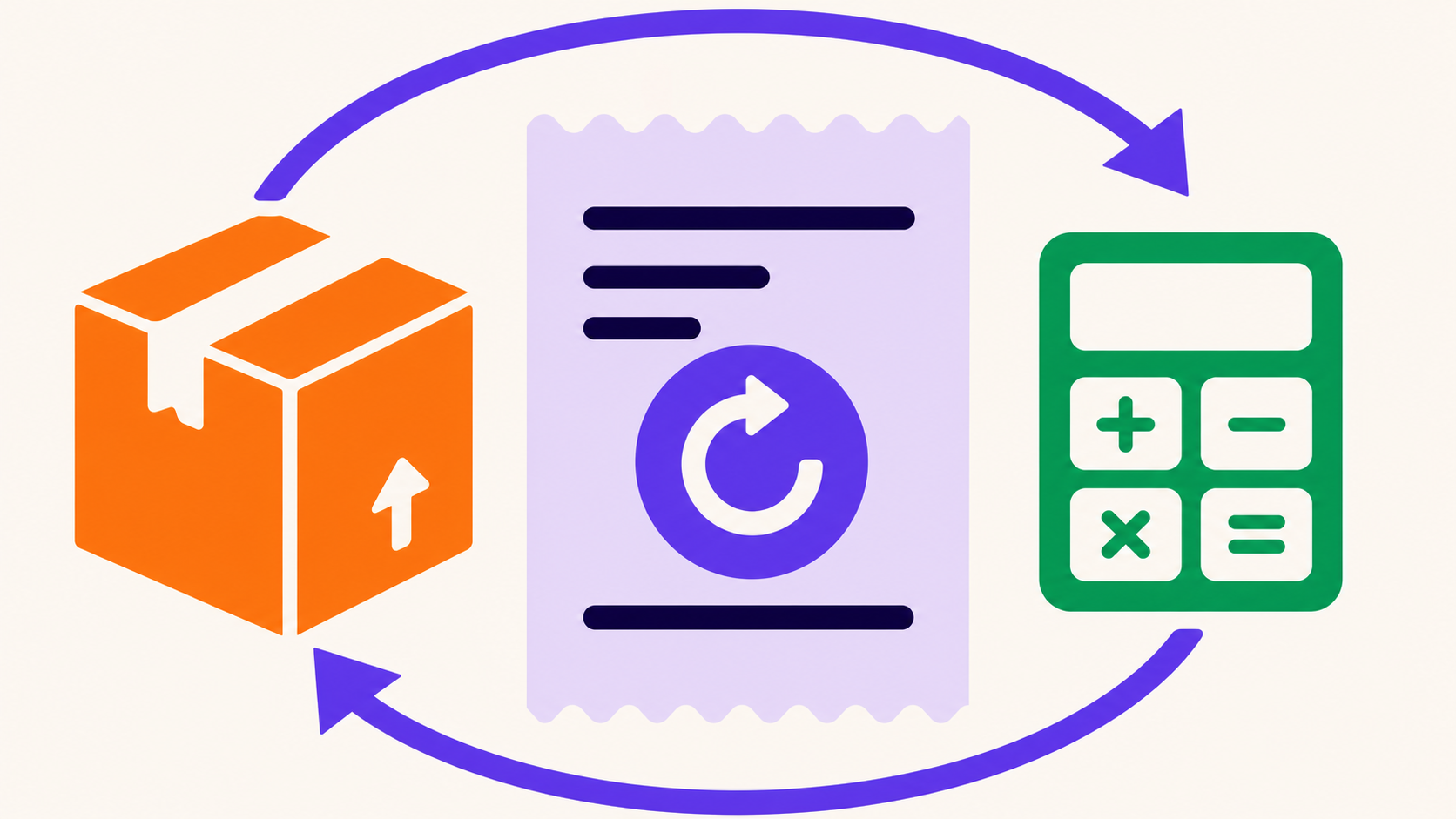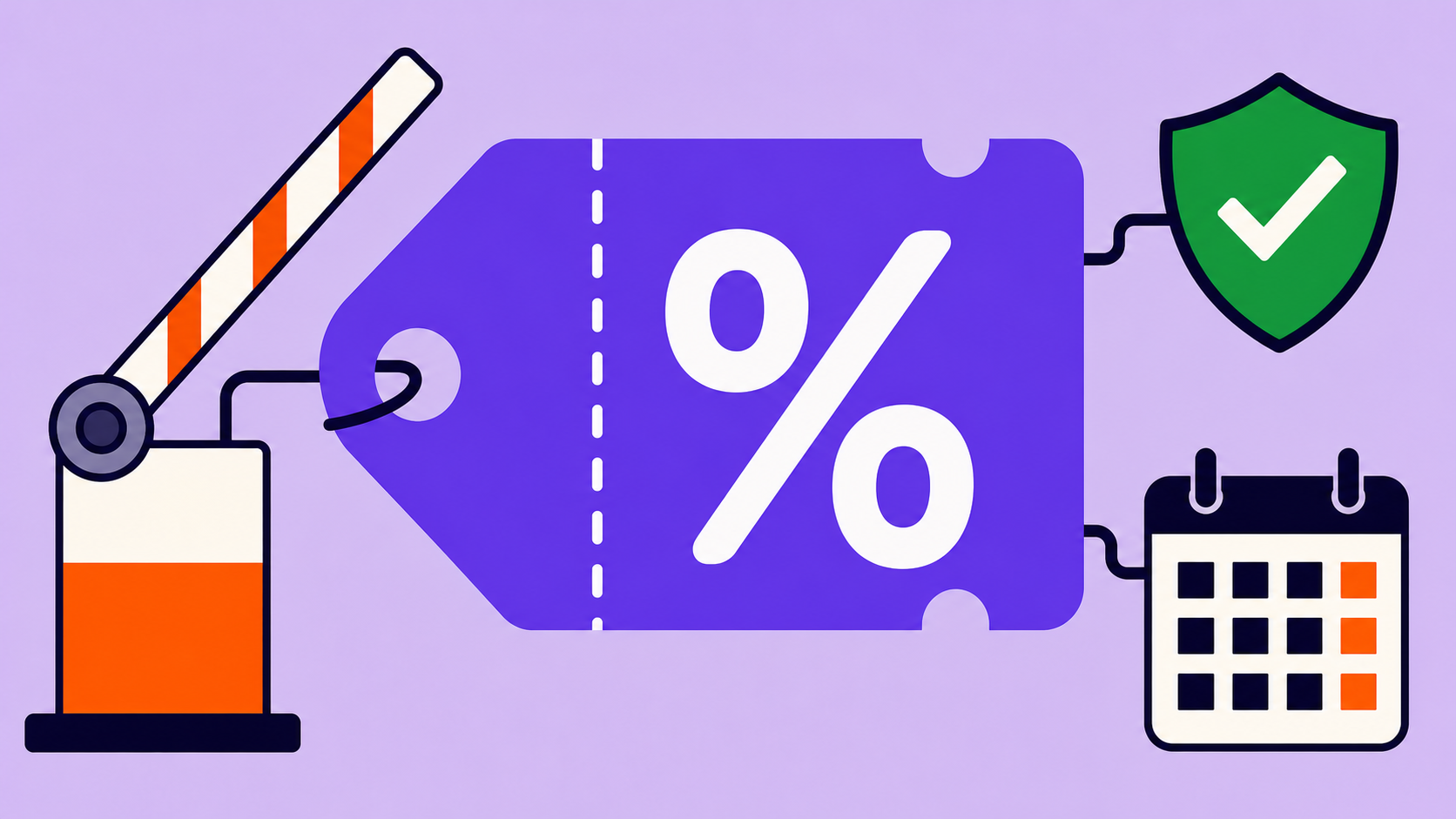

Allow multiple subscriptions when customers genuinely need independent products, quantities, recipients, or billing schedules. Restrict them when a second purchase is usually an accidental duplicate or should be an upgrade. Decide separately at cart, product, customer, billing-cycle, mixed-checkout, and gateway levels; then route blocked buyers to plan switching or account management instead of a dead end.
Key takeaways
- “Multiple subscriptions” is a stack of policies, not one switch.
- Current ArraySubs creates one subscription per subscription order line.
- Quantity remains on that subscription; regular items do not create subscriptions.
- Gateway capability can make cart rules stricter than global settings.
- A blocked duplicate needs an upgrade, migration, manage, or support path.
Separate the policy levels
Current ArraySubs settings distinguish:
| Policy | Current default | Scope |
|---|---|---|
| Multiple subscriptions in cart | On | More than one distinct subscription product |
| One subscription per customer | Off | Blocks another live agreement for account/matching email |
| Auto migrate on checkout | Off | Routes an eligible duplicate toward a supported change |
| One subscription per product | Off | Primarily limits cart quantity to one |
| Mixed cart | On | Subscription and ordinary products together |
| Different billing cycles | On | Multiple cadences together, subject to gateway |
Do not describe “one subscription per product” as a complete historical one-active-SKU-per-customer rule. Its current executable scope is mainly cart quantity.
What one checkout creates
Example cart:
- Monthly Box, quantity 2;
- Annual Membership, quantity 1;
- regular Mug, quantity 1.
Current ArraySubs creates two subscription records: one monthly subscription with quantity two and one annual subscription. The mug remains an ordinary parent-order line. Each subscription has independent dates, renewal orders, failures, cancellations, notes, shipping context, and gateway state.
This differs from WooCommerce Subscriptions’ documented grouping of some same-schedule products. Name the engine in customer and developer documentation (multiple subscriptions).
Gateway capability can override the cart
| Current integration | Mixed cart | Multiple lines | Different cycles |
|---|---|---|---|
| Stripe delegate | Yes | Yes | Yes |
| Paddle | Yes | Yes | No |
| PayPal | No | No | No |
| Manual/offline | Core settings | Core settings | Core settings |
Current ArraySubs Pro applies a restrictive capability filter across enabled gateways and validates the selected gateway at checkout. Enabling PayPal can therefore narrow composition before the buyer selects it. Treat the matrix as current product truth that still needs sandbox testing with installed gateway versions.
Allow, switch, or block?
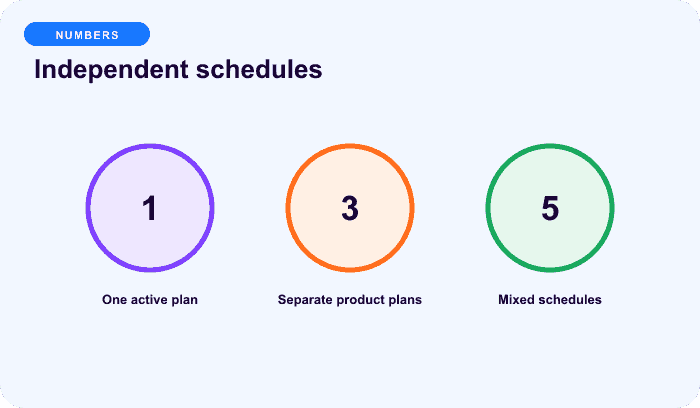
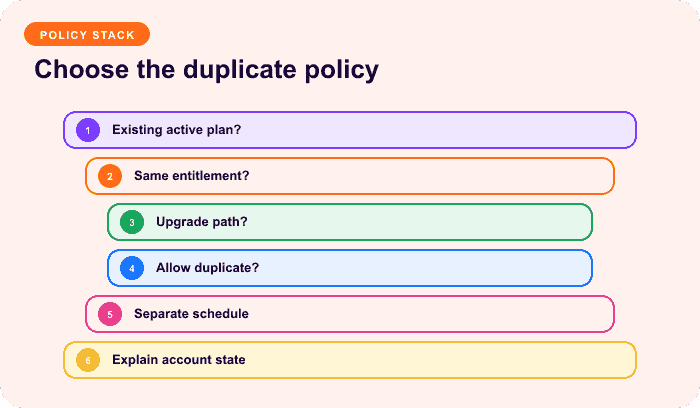
Ask:
- Does the customer need an independent entitlement, recipient, address, or schedule?
- Can operations support separate renewals, failures, cancellations, and shipping?
- Would quantity, seats, an add-on, or a bundle be clearer?
- Is the new purchase actually an upgrade/downgrade?
- Does the gateway support the composition?
If the second purchase replaces the same entitlement, route to plan switching or an eligible checkout migration. If it is an accidental duplicate, block with a direct manage/support action. If independent, allow and disclose each future charge.
Operational tradeoffs
One initial receipt can become many later orders:
renewal opportunities in a period = sum of each subscription's due cycles
A $30 monthly box quantity two plus $8 shipping produces a $68 pre-tax monthly renewal. A separate $120 annual membership renews independently. Failure or cancellation of one should not automatically change the other unless access policy explicitly links them.
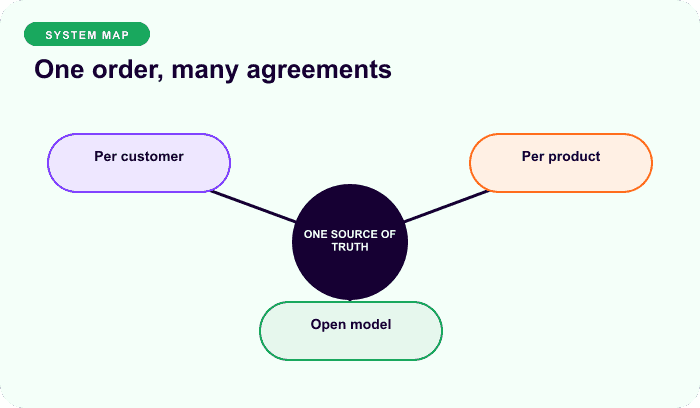
Separate subscriptions are useful for different recipients, addresses, cancellation dates, or teams. Quantity on one record is simpler when all units share one schedule, address, and lifecycle.
Test matrix
- logged-in and guest checkout with matching email;
- existing active, trial, pending, and on-hold subscriptions;
- two distinct subscription products;
- quantity two of one product;
- monthly plus annual;
- subscription plus ordinary product;
- every enabled gateway;
- eligible and ineligible auto-migration;
- one failed renewal and one cancellation without affecting the other record;
- customer account labels and support workflow.
Track blocked attempts, migration completion, multi-subscription customers, failures, refunds, and support contacts in closed windows. Conversion alone cannot decide the policy.
Final recommendation
Allow multiple subscriptions only for genuine independent needs and after gateway/operations testing. For replacement purchases, preserve one coherent agreement through switching. Never leave a blocked customer without a next step. Compare ArraySubs plans.
Frequently asked questions
Can one ArraySubs checkout create multiple subscriptions?
Yes, when settings and gateway capability allow several distinct subscription products. Current ArraySubs creates one subscription per subscription line item.
Does one subscription per product block later purchases forever?
Do not interpret it that way. Current behavior primarily limits the product’s cart quantity. Use customer-level policy and business logic for account-wide duplicates.
What happens with monthly and annual products together?
They create independent schedules. Current Stripe capability allows different cycles, while current Paddle and PayPal declarations do not. Test the exact enabled gateway set.
Should an upgrade create another subscription?
Usually not when it replaces the same entitlement. Route to a supported switch or migration so pricing, schedule, access, and history remain coherent.
If one subscription fails, do all customer subscriptions stop?
Not automatically. Each has independent renewal and status. Tie access or fulfillment only to the affected agreement unless the published product contract says otherwise.
Disclosure, verification, and update log
- July 2026: Verified against current ArraySubs cart settings, creation model, migration path, and Pro gateway capability declarations. No conversion benchmark is claimed.
Continue from strategy to setup
Use a recipe when the model is settled
These articles own the decision and operating model. The ArraySubs feature map and recipes cover the exact product, billing, and customer-workflow configuration.
Written by
Emran // ArrayHash
Research and practical guidance for WooCommerce subscription operators and implementation teams.
Technical review
ArraySubs Engineering Team
Reviewed against current ArraySubs code, product documentation, and the linked primary platform sources.